Essay
Conspiracy by Categories
Claims, institutions, financial incentives, and the relationships between powerful people.
01
What is a conspiracy?
Conspiracy is defined as a secret agreement to carry out a wrongful scheme.
I will show why this is not a constructive lens for evaluating complex systems. It invites appeals to authority: “It wasn't secret because our trusted president was in the meeting.” It requires proof of individual knowledge: “You cannot prove Monsanto knew that pesticides harmful to crops and animals could also harm humans.” Lastly, it requires knowing individual intent: “If COVID leaked from a Wuhan lab, was it intentional?” The discussion gets stuck on intent and never reaches the consequential outcomes.
There is also a kind of semantic paradox: if “secret” is treated as meaning “still hidden,” a conspiracy seems to stop fitting the definition as soon as it is proven and exposed. This enables the fallacious argument: “That's not a secret, and therefore not a conspiracy.”
02
03
Case studies
Syngenta and atrazine
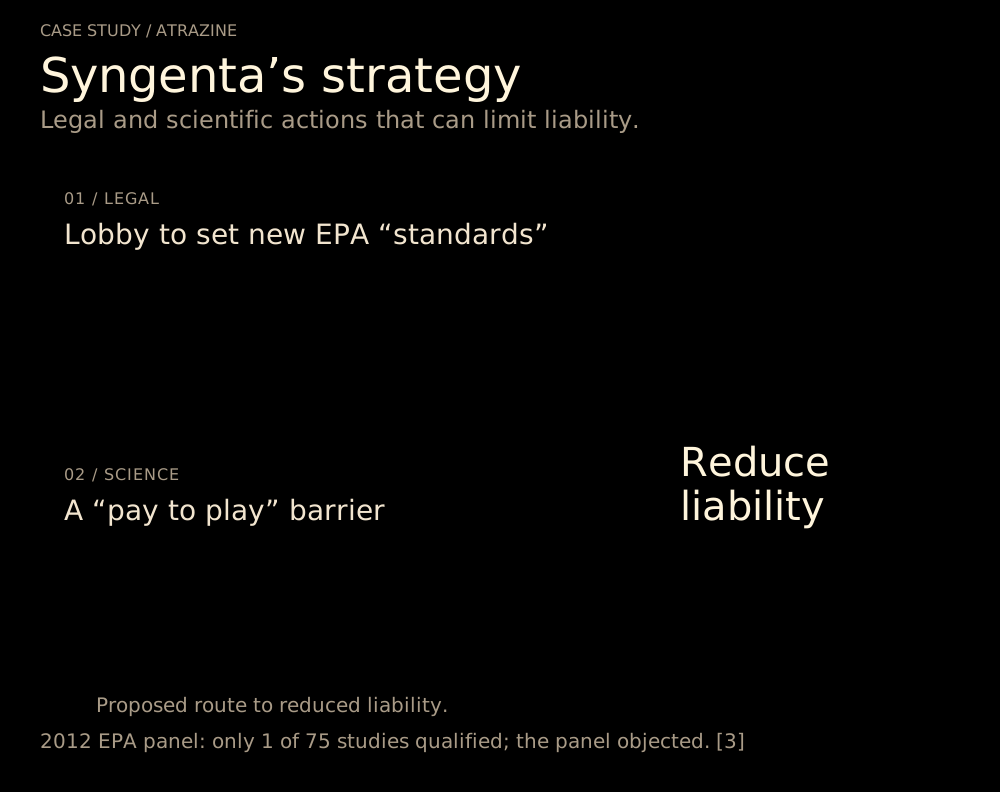
Lobbying over EPA evidence standards and costly research requirements can sideline independent research and limit Syngenta’s liability exposure.
Open diagram · Supporting research
COVID vaccines: rules, revenue, and research ties
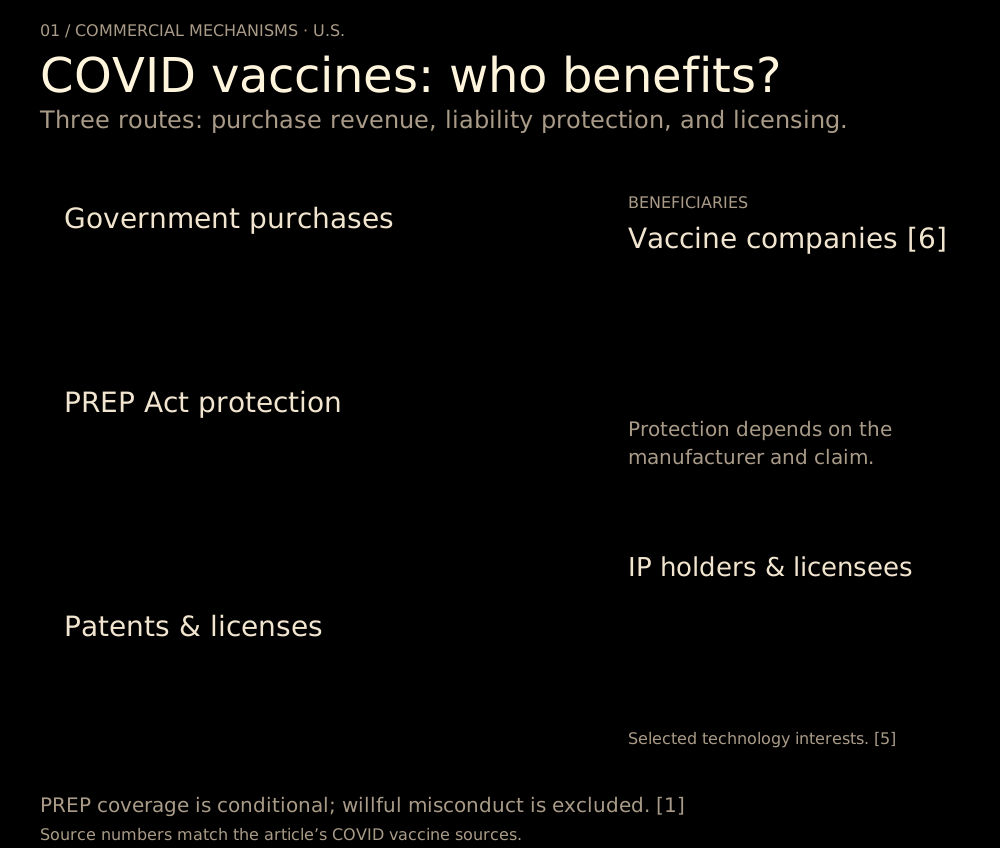
Purchase contracts fund demand, PREP Act coverage limits injury liability, and patents support licensing revenue. The proposed vaccine-definition change remains unestablished.
Open diagram · Supporting research
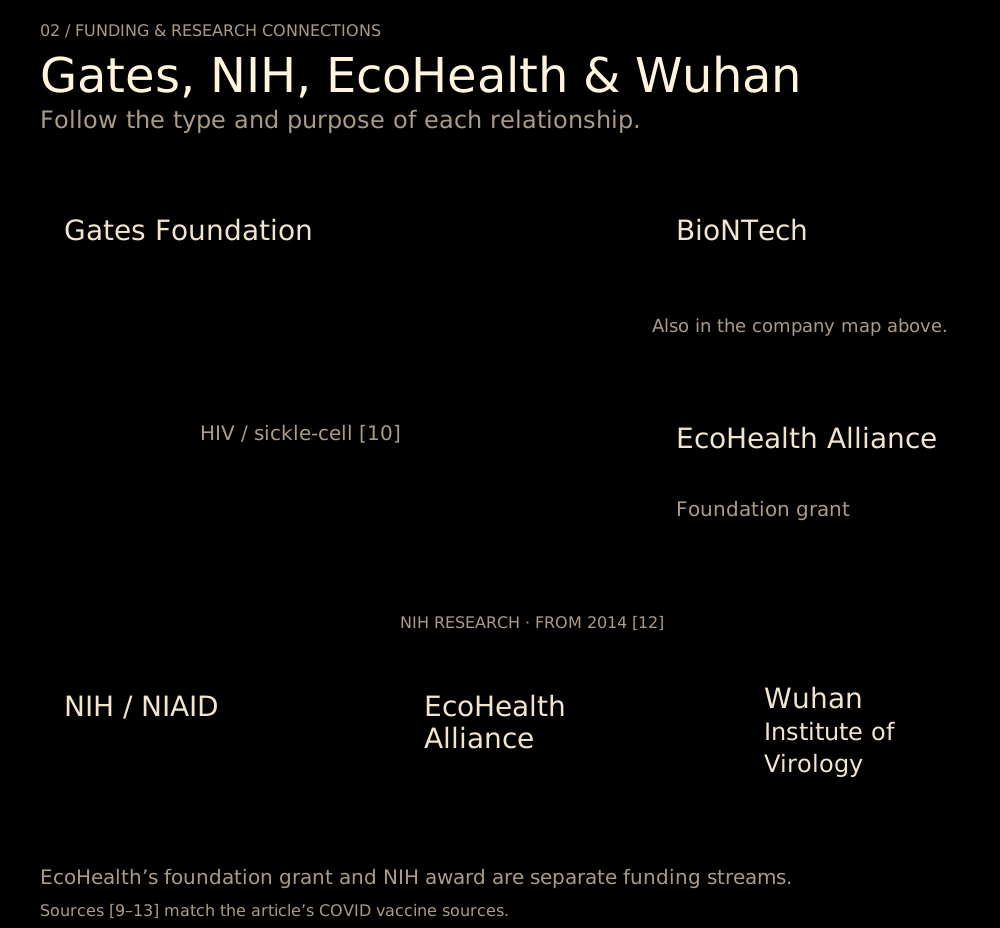
Equity investments, research collaborations, grants, and subawards connect the institutions below. EcoHealth's foundation grant and NIH award are separate funding streams.
Open research connections · Supporting research
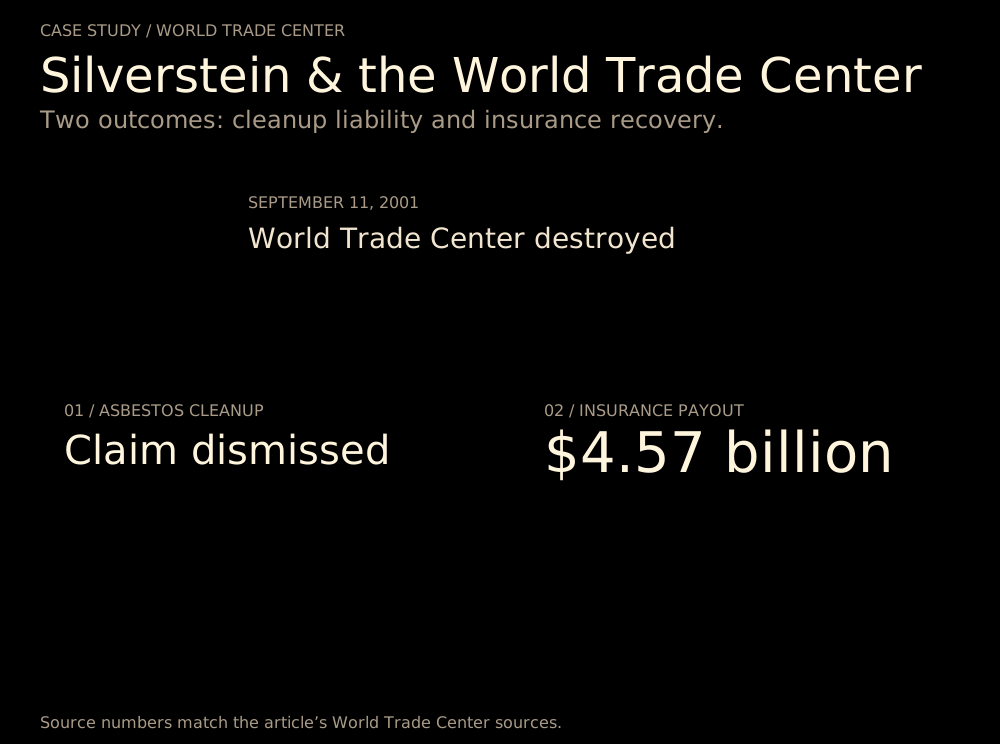
Silverstein and the World Trade Center
The WTC’s destruction led to $4.57 billion in insurance recovery for its net lessees. Courts later dismissed one WTC-dust cleanup claim against Silverstein-linked entities and other defendants. Financial benefit alone does not establish responsibility for the attacks.
04
Strange connections
The same people, capital, and relationships recur across institutions.
| Connection | What the relationship shows |
|---|---|
| Epstein → Ghislaine Maxwell → Robert Maxwell → publishing/curriculum | Criminal, family, and business relationships; a specific curriculum intervention remains unidentified. |
| Gates → Fauci → Wuhan research | Distinct foundation grants and NIH/EcoHealth subawards; the notes do not establish a shared personal investment or that the cited foundation grant funded Wuhan. |
| Peter Thiel → J.D. Vance → Donald Trump | Employment, financial backing, and political selection. |
| PayPal Mafia → technology, investment, media, and political access | An alumni network with company and investment ties, including Thiel; a known network does not establish covert coordination. |
Relationship research · PayPal Mafia
Connections identify routes through which influence could travel. Intent is a further question.
05
Closing remarks
Some conspiracies are just guys trying to make money
Recurring sales, restricted competition, favorable research, and protection from accountability offer financial advantages. Deliberate coordination, ordinary incentives, opportunism, and institutional failures can produce similar outcomes. Financial gain and the pursuit of control can reinforce one another.
Others seek dominion
The ambition extends from shaping purchases to shaping what people can know, say, and do. Psychological operations, the Panopticon, surveillance, anticipated observation, censorship, managed narratives, indoctrination, and penalties for dissent are methods of control to examine.
When does an institution's authority over conduct become an attempt to govern conscience and belief?
Gadianton robbers, the beasts, and institutional capture
Helaman 6:21–23, 38–39 describes secret loyalties protecting wrongdoing and a group's capture of government. Ether 8:22–25 warns later readers about secret combinations seeking power and gain.
Revelation 13 describes a beast from the sea with seven heads and ten horns, followed by a beast from the earth with two horns like a lamb and a dragon's voice. The chapter connects deception, compelled worship, and control over buying and selling.
I read seven as a marker of periodic completion and twelve (the ten horns plus the two horns) as a symbol of organizational wholeness:
- Twelve tribes
- Twelve apostles
- Twelve legions of angels
I see Revelation describing complete organizational capture in the last days.
If all institutions are captured, there is no need to act “secretly.” Conspiracies would simply be carried out openly, leaving victims without recourse.
06
Sources
Institutional sources
- Tuskegee — CDC timeline
- Tuskegee — CDC FAQ on deliberate infection
- St. Louis aerosol tests — National Research Council
- MKULTRA — Senate hearing
- Hillary Clinton email investigation — Justice Department
- Epstein custody investigation — DOJ inspector general
- COVID origins — WHO report
- Fluoridation — CDC
- Atrazine frog research
- Alpha-gal — CDC
- Lyme disease — CDC
- Kellogg advertising — FTC consent order
- Home oral care — American Dental Association
- Food pyramid — USDA archive
- De Beers company history
- Sugar-industry research influence
Syngenta sources
- Rachel Aviv, “A Valuable Reputation,” The New Yorker, February 10, 2014. Secondary reporting used for the Syngenta–Tozzi relationship and reported tactics. The original note and video are research leads, not verification.
- CRE, Kansas Corn Growers Association, and Triazine Network petition, November 25, 2002, hosted by EPA. The filing establishes what the petitioners requested; its arguments are not agency findings.
- FIFRA Scientific Advisory Panel, June 12–14, 2012 meeting report. Printed pp. 14–15 and 27–29 correspond to PDF pp. 16–17 and 29–31.
- EPA, archived “Atrazine Updates”. Historical ecological monitoring, mitigation, and outside data sources; not a claim about the status of every monitoring program today.
- Syngenta, 2012 Full Year Results, released February 6, 2013. Note 5, PDF p. 20: settlement payment, denial of liability, and company rationale.
- EPA response to the atrazine information-quality petition, March 27, 2003. Printed pp. 18–20: assessment revisions and the agency’s treatment of unvalidated studies.
- Syngenta, “Atrazine — The Facts”, accessed September 12, 2026. The company describes required industry studies as having multimillion-dollar costs. This is a general cost claim, not a price for the specific amphibian study; the diagram’s “pay to play” barrier is an interpretation of cost and evidence-selection pressures.
COVID vaccine sources
- 2020 COVID PREP declaration, supplementary information (2013 amendment), sections IV–VII (coverage), and section XIV (compensation); ASPR overview and questions and answers.
- FDA, Emergency Use Authorization for Vaccines Explained.
- DoD, July 22, 2020 Pfizer/BioNTech purchase announcement.
- USPTO patent requirements and Penn patent US 8,278,036.
- BioNTech 2019 F-1 licensing disclosures, 2023 20-F and exhibits, Moderna patent list, Acuitas history, Genevant settlement, and spike patent US 10,960,070.
- FDA licensed vaccines, BioNTech product update, and Sanofi/Novavax agreement.
- Novavax Q2 2024 financial results.
- Genevant/Arbutus announcement, March 3, 2026, payment and Section 1498 contingency paragraphs. No later outcome is asserted.
- BioNTech/Gates Foundation announcement, September 4, 2019.
- NIH/Gates collaboration announcement, October 23, 2019.
- Gates Foundation grant INV002838, purpose, date, committed amount, and regions fields.
- HHS OIG audit A-05-21-00025, award R01AI110964 and oversight findings; GAO-23-106119 supplies additional chronology.
- NIAID biography of Anthony Fauci.
World Trade Center sources
- World Trade Center Properties v. Hartford Fire Insurance, 345 F.3d 154 (2d Cir. 2003). Background and the policy-form/occurrence analysis.
- Port Authority, 2011 financial statements. Note K, printed p. 67 / PDF p. 70: net-lessee insurance recoveries and uses.
- World Trade Center Properties v. United Airlines, document 227 (S.D.N.Y., April 6, 2017). Opinion pp. 15–16, quoting original lease sections 15.1, 15.1.4, 15.2, and 15.4; main-site lease discussion excludes WTC 7.
- In re September 11 Litigation / Cedar & Washington, No. 10-4197 (2d Cir., May 2, 2014). Background, CERCLA defense, insurance-law distinction, and indemnification analysis.
- Cedar & Washington v. Port Authority, document 138 (S.D.N.Y., March 20, 2013). Act-of-war ruling and expressly narrow conclusion, including the warning about other claims.
- Port Authority v. Affiliated FM Insurance, 245 F. Supp. 2d 563 (D.N.J., May 17, 2001). Asbestos management/removal sections and first-party property-coverage analysis.
- EPA OIG, EPA's Response to the World Trade Center Collapse, Report 2003-P-00012, August 21, 2003. Executive summary and chapter 2: dust contamination and limits of early safety assurances.
Relationship sources
- DOJ OIG Epstein custody report (June 2023): executive summary on Maxwell's conviction.
- AP profile of Ghislaine Maxwell: family and publishing background.
- Gates Foundation grant record, INV002838: grant amount, date, recipient, and stated purpose.
- HHS OIG NIH/EcoHealth audit (2023): awards, subawards, and oversight findings.
- NIAID biography of Anthony Fauci: director tenure.
- Reuters, August 20, 2024, republished by Investing.com: Vance's employment, Thiel's backing, and Trump's running-mate selection.